
Supermarkets in Turkey 2026: Chains Compared for Expats and Newcomers
Supermarkets in Turkey compared for newcomers: discount, mid-range and premium chains, delivery apps, street markets and what daily shopping means for where you live in Istanbul.

Supermarkets in Turkey fall into three groups. Discount chains (BIM, A101 and SOK) have a small shop on almost every street and the lowest prices. Full-range supermarkets (Migros and CarrefourSA) stock far more products, and their larger branches have fresh meat, fish and bakery counters. Premium stores, led by Macrocenter, sell imported and specialty food. Add the weekly street market (pazar) for fruit and vegetables and a delivery app for heavy items, and you have the way most households in Turkey shop.
This guide is written for people who are moving to Turkey or have just arrived, above all in Istanbul. Once you move to Turkey, the supermarket quickly becomes part of your daily routine. The guide compares the main supermarket chains in Turkey, from discount stores to premium markets, and explains opening hours, payment, how online grocery delivery works, the rules on alcohol, the bag charge and the new deposit scheme. It also covers how shopping fits into everyday life in Istanbul: if you are planning a move, it shows which neighbourhoods give you the easiest access to the shops you will use most. Everything was checked in November 2026. Turkish retail changes fast, and 2026 brought several changes that older guides miss.
Supermarket Chains in Turkey at a Glance
The two tables below compare the chains you will meet most often. Store numbers come from company reports and stock exchange filings; their dates are given under the table.
| Chain | Type | Stores |
|---|---|---|
| A101 | Discount | ~13,600 |
| BIM | Discount | 12,751 |
| SOK | Discount | 11,199 |
| Migros | Full range | 3,827 |
| KOOP Market | Co-op | 2,338 |
| CarrefourSA | Full range | ~1,237 |
| File | Supermarket | 364 |
| Metro | Wholesale | 36 |
Store counts are for Turkey: A101 in 2026 (approximate), BIM at the end of 2025, SOK and Migros in September 2026, KOOP Market in June 2026, CarrefourSA at the end of 2025 (approximate) and File in mid-2026. The Migros figure covers all of its formats, including Migros Jet and Macrocenter. File belongs to BIM, and KOOP Market is the new name of Tarim Kredi Kooperatif Market. Sources: company information and Public Disclosure Platform filings of BIM, Migros, SOK and Metro; A101 and CarrefourSA as reported by ESM Magazine in July 2026; KOOP Market from its half-year report as quoted in the Turkish press in August 2026.
| Chain | Price level | Alcohol |
|---|---|---|
| BIM | Low | No |
| A101 | Low | No |
| SOK | Low | No |
| Migros | Middle | Yes |
| CarrefourSA | Middle | See below |
| Macrocenter | High | Yes |
| Metro | Bulk packs | Yes |
Discount Supermarkets in Turkey: BIM, A101 and SOK
Discount chains have small stores on almost every street. They focus on everyday essentials and own-label products, and they change part of their range every week with special offers. None of the three sells alcohol. For a newcomer they are the place for staples: pasta, rice, pulses, dairy products, eggs, cleaning products and bottled water.
BIM
One of the most widespread discount chains in Turkey, with thousands of stores nationwide: it started in 1995 with 21 shops and had 12,751 in Turkey at the end of 2025. Prices are low, the range is kept to about 1,000 products, many of them own-label, and the weekly special offers, often including household goods and electronics, are well known. By sales BIM is the largest food retailer in the country, with revenue of TRY 721 billion in 2025. It sells neither alcohol nor tobacco. Since August 2026 BIM products can also be ordered through the Yemeksepeti app in Istanbul, Ankara and Izmir, at the same prices as on the shelf.
File is the supermarket format of BIM, launched in 2015: bigger stores with a wider range than a BIM shop. There were 364 File stores by mid-2026.
A101
BIM's main discount rival, with a very large store network and its own weekly campaigns. A101 opened in 2008 and now has about 13,600 stores, the largest network in Turkey by number of shops. Its app combines home delivery (A101 Kapida), a wider non-food catalogue and a points programme. In 2026 the owner of A101 also bought CarrefourSA; the two continue as separate brands, as explained below.
SOK
A discount chain at a similar price level to BIM and A101, with a slightly wider range of branded products. SOK had 11,199 stores in September 2026 and trades in all 81 provinces. Orders can be placed through its Cepte Sok app, and its Win campaigns give discounts to registered customers. On the shop sign the name is written with a cedilla, ŞOK.
Mid-Range Supermarkets: Migros and CarrefourSA
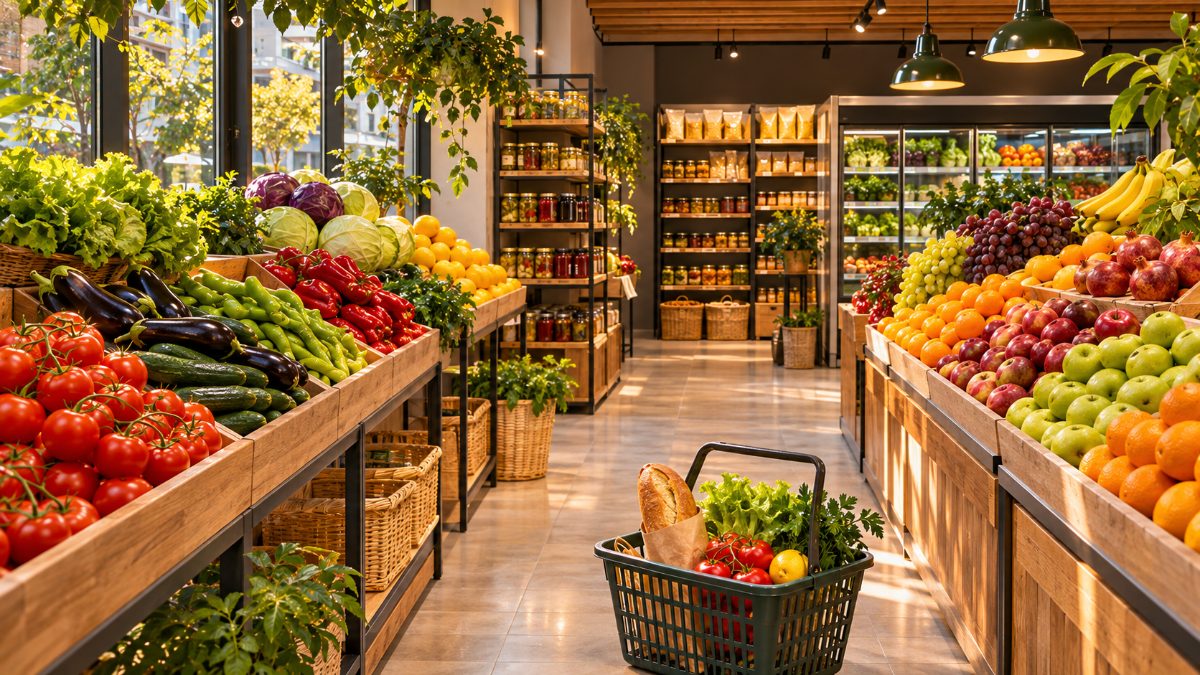
Full-range supermarkets cost a little more than the discounters and give you much more choice: several brands of each product, fresh counters, international items and, in the bigger branches, household goods.
Migros
Turkey's best-known supermarket brand. It was founded in Istanbul in 1954, opened its first shop in Beyoglu in 1957 and today belongs to Anadolu Group. At the end of September 2026 it had 3,827 stores, and it serves all 81 provinces. Store sizes are shown by the number of Ms on the sign, from small neighbourhood shops to large hypermarkets: M is a basic food shop, MM and MMM carry progressively wider ranges and 5M is the hypermarket. Migros Jet is the small convenience format found on residential streets.
Migros also has a strong loyalty programme and online delivery. The Money card, which also works from the app, gives discounts and points; Migros Sanal Market delivers scheduled orders, and Migros Hemen brings a smaller range of about 2,000 products within roughly half an hour. Online channels accounted for 21% of Migros sales in 2025, tobacco and alcohol excluded. Most Migros stores sell alcohol.
CarrefourSA
For many years CarrefourSA was the Turkish partner of Carrefour, with neighbourhood stores and larger hypermarkets in shopping centres, run together with Sabanci Holding. That changed in 2026. On 31 July, 89.28% of the company passed to Yeni Magazacilik, the owner of A101, and the companies have said that the two brands will keep their own identities and management. CarrefourSA had about 1,237 stores at the end of 2025, in formats that run from Mini to Hyper, plus a gourmet format called Gurme.
One practical point: Turkish media have reported since August 2026 that CarrefourSA stopped ordering alcoholic drinks after the change of owner and will end sales once its stock is gone. The company has not confirmed this publicly, so do not count on finding wine or beer there.
Hakmar Express, Mopas and Other Regional Chains
Hakmar Express is a smaller chain found mainly in Istanbul neighbourhoods, convenient for daily top-up shopping. Mopas is a regional chain founded in Istanbul in 1996, with stores in Istanbul and neighbouring Kocaeli; it opened its 130th branch in Pendik in June 2025. Its shops range from about 250 to 2,000 square metres and have fresh food counters: butcher, delicatessen and greengrocer. Local chains such as Onur Market and Happy Center play the same role in parts of Istanbul, and many Turkish cities have a home-grown chain of their own.
KOOP Market
The shops of the agricultural credit co-operatives, long known as Tarim Kredi Kooperatif Market, have traded as KOOP Market since November 2025, although older signs remain in place. The chain sells food sourced through farmers' co-operatives alongside ordinary groceries and had 2,338 stores in June 2026.
Premium Supermarkets and Imported Food
Premium markets offer imported products, a wider deli and organic range and a more relaxed shopping experience. You will find them most easily in established central districts and in the shopping centres of newer residential areas.
Macrocenter
The premium store format of the Migros group, popular with expats for imported and specialty products. Macrocenter stores are concentrated in upmarket areas such as Besiktas, Sariyer, Kadikoy and Atasehir. The chain's own store finder listed 106 branches in Istanbul on 10 November 2026: 21 in Kadikoy, 12 in Sariyer, 11 in Besiktas, 7 in Sisli and 5 in Atasehir, with the rest spread over 18 other districts. Migros keeps adding to the format, with 22 new Macrocenter stores in 2025 and six more in September 2026 alone. Orders are also taken online through Macroonline. Prices are the highest of the chains in this guide.
Metro
Metro is a cash-and-carry wholesaler aimed at restaurants, hotels and small shops, with 36 large stores in 20 cities; its first Turkish store opened in 1990. It is useful for bulk buying, imported food and drink and professional kitchen goods. Metro works with customer accounts, and its website states that private customers can open an account and apply for an individual Metro card.
Where to Find International Products
- Imported cheese, charcuterie, sauces and Asian or European ingredients: Macrocenter, the largest Migros branches, the Gurme format of CarrefourSA and Metro.
- Pork: ordinary supermarkets and the discount chains do not stock it. Look in some Macrocenter branches, at specialist butchers and delicatessens in the big cities (the best-known pork butcher in Istanbul has traded in Beyoglu since 1975) and in the resort towns of the south and west coasts.
- Online: the marketplaces Trendyol and Hepsiburada list small importers that sell foreign sweets, sauces and speciality items.
- Spices, nuts and dried fruit: the Spice Bazaar in Eminonu and the shops around it, or any neighbourhood shop that sells nuts and dried fruit (kuruyemis).
Imported goods cost noticeably more than local equivalents, so it pays to try the Turkish version of a product first and keep imports for the things you really miss.
Where to Buy Groceries in Turkey Besides Supermarkets
Supermarkets are only part of the picture. A large share of fresh food in Turkey is still bought at street markets and in small specialist shops.
Open Markets (Pazar)
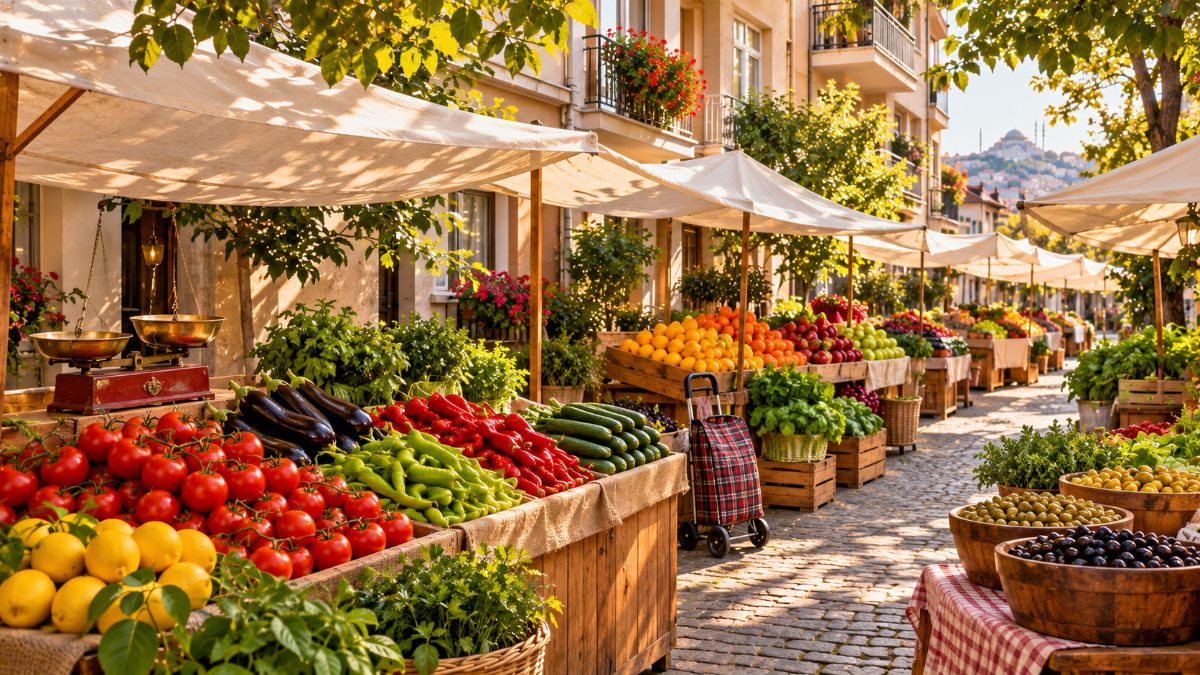
Beyond supermarkets, neighbourhood open markets are usually the freshest and most economical option for fruit, vegetables, cheese and olives. Each neighbourhood has its market on a fixed day of the week, so locals often plan their weekly shopping around it. In Istanbul the best known is the Tuesday market in Hasanpasa, Kadikoy, which sells food on Tuesdays and mostly clothing and household textiles on Fridays. Besiktas holds its market on Saturdays, and the Ferikoy organic market in Sisli is also a Saturday market. Stalls show prices per kilo. Take cash and your own bags. Read more about local food in our guide to Turkish cuisine.
Neighbourhood Shops
- Bakkal: the corner shop, for bread, milk, water and last-minute items.
- Manav: the greengrocer.
- Kasap: the butcher, where meat is cut to order.
- Firin: the bakery, with fresh bread through the day.
- Tekel: a small licensed shop selling alcohol, soft drinks and tobacco.
Online Grocery Delivery in Turkey
Online grocery shopping is widely used in Istanbul, especially in central districts. These are the main options in late 2026:
- Getir: fast delivery from small local warehouses, plus larger weekly orders and drinking water.
- Trendyol Go: quick grocery and restaurant delivery within the Trendyol app.
- Migros Sanal Market and Migros Hemen: scheduled weekly delivery and express orders from Migros. Macroonline does the same for Macrocenter.
- Yemeksepeti: best known for restaurant orders. Its markets section delivers groceries too, including BIM products in Istanbul, Ankara and Izmir since August 2026.
- Chain apps: A101 (A101 Kapida), SOK (Cepte Sok) and CarrefourSA deliver from their own stores.
The sector is consolidating. Uber, which already controls Trendyol Go, agreed in February 2026 to take over the delivery business of Getir, and the Competition Board approved the deal in June 2026. Uber has said that it intends to combine the two networks, so app names and coverage may change.
Delivery coverage and speed depend on your neighbourhood, which is one more reason to choose your area carefully when you move. Before you commit to a home, enter the address in two or three of these apps and see what each one offers.
Moving to Istanbul? Daily shopping changes a good deal between districts. Our comparison, best areas to buy property in Istanbul, weighs the main districts against each other, and the district pages for property for sale in Istanbul show where international buyers settle.
How Supermarket Prices Compare: Which Is the Cheapest?
Discount chains (BIM, A101, SOK) are generally the cheapest, mid-range supermarkets (Migros, CarrefourSA) sit in the middle and premium markets (Macrocenter) are the most expensive. Open markets are usually the best value for fresh produce. Prices in Turkey change frequently, so compare current offers in the apps before you shop.
No single chain is cheapest for everything. The discounters win on staples and own-label goods. Migros and CarrefourSA narrow the gap with loyalty-card prices and weekly promotions, and they are often the only place to find a particular brand. That is why this guide prints no price list: it would be out of date within weeks. Use the official comparison site instead. Market Fiyati (marketfiyati.org.tr), built by the state research council TUBITAK together with the Central Bank and opened in February 2025, shows current prices for nearly 50,000 products at A101, BIM, CarrefourSA, Hakmar, Migros, SOK and the co-operative markets.
Two details help when you compare. Shelf prices include VAT, which has been 1% on most basic foods since February 2022. And shelf labels show the unit price, per kilo or per litre, next to the pack price.
Opening Hours, Payment and Shopping Rules
Opening Hours
Supermarkets in Turkey open seven days a week, Sundays included. Discount stores typically trade from 09:00 to 21:00, some until 21:30, while Migros and CarrefourSA generally stay open until 22:00. Branches inside shopping centres open at 10:00 with the centre. Food shops also open on most public holidays. Hours vary by branch, so check the store finder in the app of the chain. Supermarkets that stay open all night are rare; late in the evening the alternatives are a corner shop or a delivery app that covers your address.
Paying
Chain supermarkets accept debit and credit cards as well as cash, and contactless payment is standard: since 15 January 2026 a contactless payment of up to TRY 2,500 needs no PIN. Street markets and small shops work mostly with cash. Keep the receipt (fis) in case you need to take something back.
Plastic Bags
Plastic carrier bags are not free. The charge is set each year by the Ministry of Environment and has been TRY 1 per bag, taxes included, since 1 January 2026. A reusable bag or a shopping trolley saves money, and the trolley earns its keep at the pazar.
Deposit on Bottles and Cans
A national deposit scheme started on 1 July 2026. Drinks sold in packaging that carries the DOA logo include a deposit of TRY 1 per container, which you get back when you hand the empty container in at a return machine or a participating shop. The refund is paid into a wallet in the DOA mobile app and can be moved to a bank account, withdrawn at a cash machine or spent on shopping.
Alcohol
Shops may not sell alcohol between 22:00 and 06:00, and never to anyone under 18. The rule comes from Law No. 4250 as amended in 2013 and applies to every retailer. BIM, A101, SOK and File do not sell alcohol at all. Migros (most branches), Macrocenter and Metro do, as do tekel shops. For CarrefourSA, see the note above.
Returns
Turkish consumer law (Law No. 6502) gives no automatic right to return a non-faulty item bought in a shop, so exchanges depend on the policy of the store. Faulty goods are different: you can ask for a refund, a replacement, a repair or a price reduction. Online orders can normally be cancelled within 14 days, but that right does not cover food that spoils quickly.
Labels, Weights and Dates
Fresh produce is priced per kilo (kg). On a label, adet means per piece and demet means per bunch. Loose fruit and vegetables are weighed either at a scale in the produce section or by the cashier, depending on the store. Two dates appear on packaging: son tuketim tarihi (use by) and tavsiye edilen tuketim tarihi (best before). Meat in mainstream Turkish supermarkets is halal; pork is the exception and is sold only in the places listed above.
Supermarkets in Istanbul: Where to Live for Easy Daily Shopping
Istanbul has every chain in this guide, and the discounters are present in practically every district. What differs from area to area is the mix within walking distance. The Migros store finder gives a feel for it: on 10 November 2026 it listed 595 Migros stores of all sizes in 38 of the city's 39 districts, on top of the 106 Macrocenter branches.
| District | Migros | Macrocenter |
|---|---|---|
| Kadikoy | 63 | 21 |
| Sisli | 25 | 7 |
| Sariyer | 23 | 12 |
| Atasehir | 22 | 5 |
| Beylikduzu | 21 | 4 |
| Besiktas | 20 | 11 |
| Basaksehir | 18 | 1 |
Source: store finders of Migros and Macrocenter, 10 November 2026. Counts change as branches open and close.
- Central and walkable: Besiktas, Sisli and Kadikoy have supermarkets, open markets and delivery services within a few minutes. Shops here tend to be small formats at street level, topped up by a weekly market: Saturday in Besiktas, the Tuesday market in Kadikoy and the Ferikoy organic market in Sisli. Our guides to living in Sisli and Nisantasi and buying property in Kadikoy describe daily life there.
- Family compounds with shopping nearby: Basaksehir, Beylikduzu and Atasehir combine newer residential projects with large shopping centres. The biggest supermarkets in Istanbul are in districts of this kind: the seven 5M Migros hypermarkets in the city are in Beylikduzu, Esenyurt (two), Basaksehir, Kucukcekmece, Pendik and Silivri, all outside the historic centre. See living in Basaksehir and what to do in Beylikduzu.
- Bosphorus and the northern suburbs: Sariyer has the second-largest number of Macrocenter branches in the city, which suits households that buy a lot of imported food. Read more in living in Sariyer.
- Near transport: homes close to metro stations make daily errands easier. See buying property near metro stations.
For the wider choice between the two shores, see European vs Asian side of Istanbul.
Supermarkets and Choosing Where to Live
Daily shopping is a practical test of a neighbourhood. Large residential compounds in Basaksehir, Beylikduzu and similar districts often have a supermarket inside or next door, while central districts rely on small neighbourhood shops and weekly street markets (pazar). Some big housing estates even have a Migros branch that carries the name of the estate in the store finder.
When you view a home, check four things on foot: the nearest discount store, the nearest full-range supermarket, the day and place of the local pazar, and which delivery apps cover the address. In a residence complex (site), ask whether there is a market on the premises and what the monthly maintenance fee covers; our guide to aidat and site management explains how these fees work.
If a move to Turkey is on your mind, our step-by-step guide on buying property in Turkey shows how foreigners purchase a home; after that, go through the districts one at a time under property for sale in Istanbul. All current listings are on our property for sale in Turkey page.
Everyday Living Costs in Istanbul
Groceries are only one part of your monthly budget. Sample budgets for a single person, a couple and a family, with rent, bills and transport alongside groceries, are set out in our 2026 look at the cost of living in Istanbul. A simple way to estimate your own food costs before you arrive is to fill a basket with a typical week of shopping on the website or app of one of the chains and note the total. When you plan a move to Istanbul, also consider:
- Housing: rent or, if you buy, the building's monthly maintenance fee (aidat), which depends on the facilities of the project.
- Utilities: electricity, natural gas, water and internet; see utility subscriptions for new owners in Istanbul.
- Transport: metro, Marmaray, ferries and buses with the Istanbulkart. See our public transport guide.
- Property costs for owners: annual property tax, insurance and maintenance, covered in annual costs of owning property in Turkey.
Your First Weekly Shop: A Simple Routine
- Staples from a discounter. Buy pasta, rice, pulses, dairy products, eggs and cleaning products at BIM, A101 or SOK, whichever is closest.
- Fresh produce from the pazar. Go on market day for fruit, vegetables, olives and cheese.
- The rest from a full-range supermarket. Use Migros or CarrefourSA for fresh meat and fish, particular brands and international items, and sign up for the loyalty card on your first visit.
- Heavy items by app. Order drinking water, detergent and other bulky goods for delivery to the door.
- Bags and bottles. Carry your own bags, and return drinks containers that carry the DOA logo to get the deposit back.
Turkish Shopping Vocabulary
| Turkish | English |
|---|---|
| market | grocery shop or supermarket |
| pazar | street market (also Sunday) |
| indirim | discount |
| fiyat | price |
| kasa | checkout |
| poşet | carrier bag |
| fiş | receipt |
| taze | fresh |
| ekmek | bread |
| süt | milk |
| yumurta | eggs |
| peynir | cheese |
| et, tavuk, balık | meat, chicken, fish |
| meyve, sebze | fruit, vegetables |
| su | water |
| Ne kadar? | How much is it? |
| Kart geçiyor mu? | Do you take cards? |
| Poşet istemiyorum | I do not need a bag |
Frequently Asked Questions
Where can I buy groceries in Turkey?
In four kinds of place: discount chains (BIM, A101 and SOK) for staples, full-range supermarkets (Migros and CarrefourSA) for wider choice, the weekly neighbourhood street market for fruit and vegetables, and delivery apps such as Getir and Migros Sanal Market. Small corner shops cover anything you forgot.
What are the main supermarket chains in Turkey?
The main supermarket chains in Turkey are the discounters BIM, A101 and SOK, the full-range supermarkets Migros and CarrefourSA, and the premium chain Macrocenter, which belongs to Migros. File (owned by BIM), the co-operative KOOP Market, the wholesaler Metro and regional chains such as Hakmar Express and Mopas complete the list.
Which is the cheapest supermarket in Turkey?
BIM, A101 and SOK are the cheapest supermarkets in Turkey for everyday staples, and their prices are close to one another. Which of the three is cheapest changes from product to product and from week to week, so check the official comparison site Market Fiyati or the weekly offers of each chain. For fruit and vegetables, the street market is usually cheaper than any supermarket.
Which is the biggest supermarket chain in Turkey?
By number of shops it is A101, with about 13,600 stores, followed by BIM (12,751 in Turkey at the end of 2025) and SOK (11,199 in September 2026). By sales BIM is the largest, with revenue of TRY 721 billion in 2025, ahead of Migros with TRY 412.8 billion. The largest individual stores are the 5M Migros and CarrefourSA hypermarkets and the wholesale halls of Metro.
Is Migros or BIM better?
They do different jobs. BIM is cheaper and quicker for a short list of basics, but it carries only about 1,000 products and no alcohol. Migros costs more and offers far more choice, fresh counters, a loyalty card and home delivery. Many households use both: a discounter for staples and Migros for everything else.
What is the difference between CarrefourSA and Migros?
Both are full-range supermarkets with neighbourhood branches and hypermarkets. Migros has the larger network, 3,827 stores against about 1,237, and also owns Macrocenter. CarrefourSA was sold in July 2026 to the owner of A101, and press reports say that it is ending alcohol sales, which Migros continues.
Is there a Lidl, Aldi, Walmart or Costco in Turkey?
No. None of these chains has stores in Turkey. The closest equivalents to Aldi and Lidl are BIM, A101 and SOK. For hypermarket shopping use a 5M Migros or a CarrefourSA hypermarket, and for bulk buying in the style of Costco there is Metro.
What time do supermarkets open and close in Turkey?
Most open at 09:00. Discount stores usually close at 21:00 or 21:30, and Migros and CarrefourSA at about 22:00; branches in shopping centres open at 10:00. Supermarkets trade seven days a week and on most public holidays. Supermarkets that stay open for 24 hours are rare.
Can you buy alcohol in supermarkets in Turkey?
Yes, in some of them. Migros, Macrocenter and Metro sell wine, beer and spirits, while BIM, A101, SOK and File do not. By law no shop may sell alcohol between 22:00 and 06:00 or to anyone under 18. Small licensed shops called tekel are the other everyday source.
Can you buy pork in Turkey?
Pork is legal in Turkey but hard to find, because demand is small. The discount chains and ordinary supermarkets do not stock it. Try some Macrocenter branches, specialist butchers and delicatessens in the big cities, and shops in the resort towns of the south and west coasts.
What are the main grocery delivery apps in Turkey?
The main grocery delivery apps in Turkey are Getir, Trendyol Go, Migros Sanal Market with its express service Migros Hemen, and Yemeksepeti. A101, SOK and CarrefourSA also deliver through their own apps. Coverage depends on the address, so check which ones serve your street.
Can I pay by card in Turkish supermarkets?
Yes. Chain supermarkets take debit and credit cards, and contactless payments of up to TRY 2,500 need no PIN. Carry cash for street markets, corner shops and very small purchases.
Do you have to pay for plastic bags in Turkey?
Yes. Shops must charge for plastic carrier bags, and in 2026 the charge is TRY 1 per bag. Drinks containers with the DOA logo also carry a deposit of TRY 1, which is refunded when you return them.
Is grocery shopping in Turkey expensive?
It depends on what you buy. Local fruit, vegetables, bread, pulses and dairy products are the affordable part of a Turkish shopping basket, while imported goods and alcohol cost considerably more. Prices have risen quickly in recent years, so treat any figure you read online with caution and check current prices in the apps.
Where do expats buy groceries in Istanbul?
A common pattern is a discount store for basics, Migros or CarrefourSA for the wider range, the weekly neighbourhood market for fresh produce and Macrocenter or specialist shops for imported food. Delivery apps are widely used in the central districts, which makes it possible to do a full shop without a car.
Thinking of Moving to Turkey?
Bigist Invest helps international buyers find homes in Istanbul and other Turkish cities. If shops, markets and transport on the doorstep matter to you, describe your daily routine to us and our team will shortlist districts and projects to match. Our team offers a free consultation, with no obligation.