
How to Evaluate a Property Developer in Turkey Before Investing
How to Evaluate a Property Developer in Turkey Before Investing
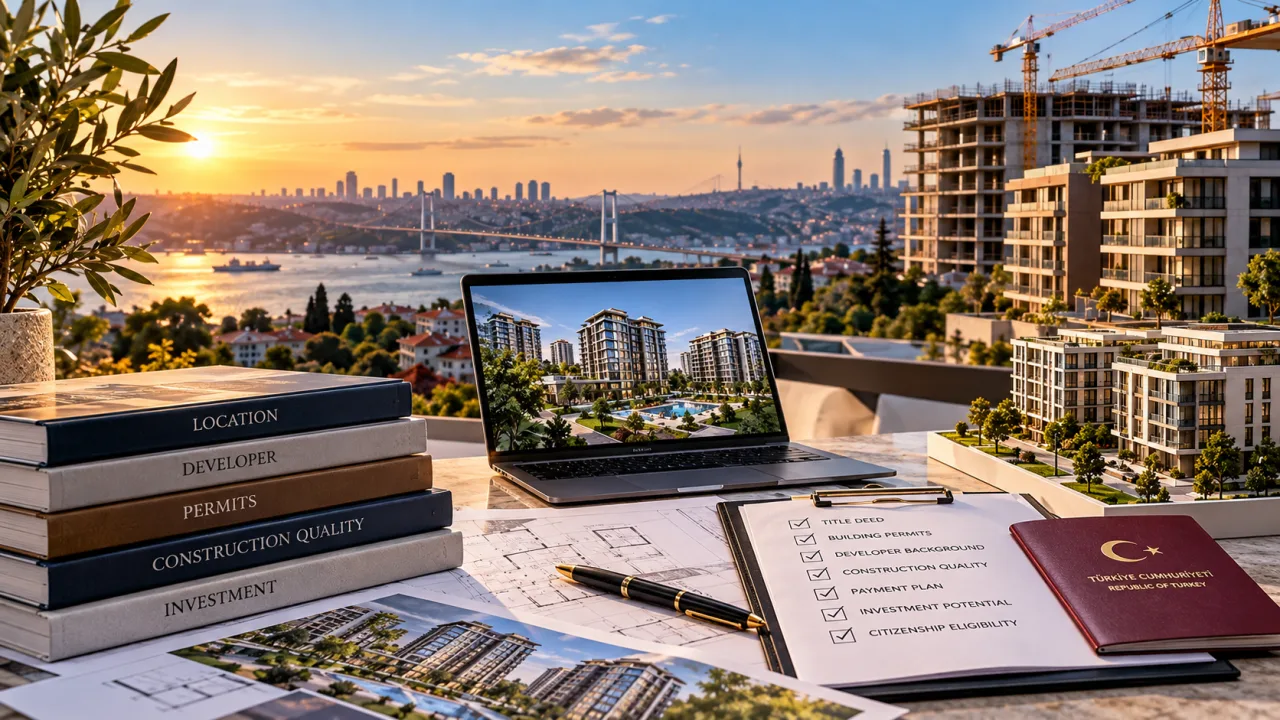
Buying property in Turkey can offer different opportunities for international buyers, from purchasing a home in Istanbul to acquiring a property for rental income or exploring real estate investment for Turkish citizenship.
However, choosing the right apartment is only part of the decision. The company developing the project, the property's legal status, construction progress and the documents supporting the sale also deserve careful attention.
A well-presented brochure, attractive showroom or competitive starting price should not replace independent checks.
This guide explains how to evaluate a property developer in Turkey before investing, which documents to review, how to identify potential warning signs and what foreign buyers should consider before committing their money.
1. Research the Developer's Previous Projects
Start by identifying the legal company responsible for developing the property. A project's marketing brand may differ from the legal entity responsible for construction, so establish which company is named in the relevant contracts and official records.
Research the developer's previous projects and look beyond promotional materials.
Consider the following questions:
Which projects has the developer completed?
Can you visit completed buildings or inspect them independently?
Are there occupied properties that demonstrate the developer's delivery record?
What information is available about construction quality and after-sales support?
Can you verify the developer's role in the projects it presents as its own?
Where possible, speak with existing owners or independent professionals familiar with completed developments.
A long portfolio can be useful evidence of experience, but it is not a guarantee of future performance. The quality, legal status and delivery history of individual projects still need to be assessed.
2. Verify the Legal Identity of the Developer
Before signing a contract or transferring a substantial payment, establish the identity of the company involved in the transaction.
Ask for the full registered company name and relevant corporate details. Where appropriate, these can be checked against official commercial registration records.
Also establish the relationship between the developer, the landowner, the seller and any intermediary involved in the transaction.
These parties may be different entities. Understanding their respective roles can help you determine who is responsible for delivering the property, transferring ownership and meeting the contractual obligations.
If a company claims that it has completed major projects, ask for specific project names and supporting evidence rather than relying solely on its marketing claims.
For a significant investment, consider having a Turkish lawyer independently review the parties and contractual arrangements.
3. Check the Land Title and Legal Status of the Property
One of the most important steps is checking the legal status of the actual property you intend to buy.
In Turkey, property ownership is formally transferred through registration at the relevant land registry directorate. A preliminary agreement or reservation document does not, by itself, complete the transfer of ownership. <Cite refs={["turn686322search8","turn686322search13"]}/>
Before proceeding, establish:
Who is registered as the owner of the land or independent unit?
Does the seller have the authority to sell the property?
Are there mortgages, liens or other restrictions affecting the property?
Does the property description match the unit being marketed?
Are there any legal issues that could prevent the intended transaction?
You can consult the official Turkish Land Registry and Cadastre parcel inquiry system for available parcel information. However, an online map or parcel result is not a substitute for a complete legal review of ownership and restrictions.
For more information, consult the official Invest in Türkiye guide to acquiring property and citizenship.
4. Review Building Permits and Occupancy Documentation
A developer's reputation cannot replace checks on the individual project's documentation.
For a completed building, ask whether the relevant occupancy permit, commonly called iskan, has been issued and whether the documents correspond to the specific building and unit.
For a project under construction, ask for information about the applicable construction permit, approved project documentation, construction stage and expected completion arrangements.
The exact documents and checks required depend on the project's status and circumstances. An independent professional can help establish which approvals should exist at each stage.
Do not assume that a building is fully compliant simply because construction is visibly advanced or apartments are being marketed.
For additional background, see our guide to understanding building standards before buying property in Turkey.
5. Understand the Difference Between Ready and Off-Plan Property
The stage of construction changes the risks a buyer needs to evaluate.
Ready-to-Move Property
A completed property may allow you to inspect the actual apartment, assess the surrounding environment and review the building's condition before purchasing.
Nevertheless, completion does not eliminate the need to check title records, occupancy documentation, physical defects and any restrictions affecting the property.
Off-Plan Property
Buying before completion may provide a wider choice of units or access to a developer's payment schedule. However, buyers also need to assess construction progress, contractual delivery terms and the possibility of delays.
Before purchasing off-plan, examine:
The legal identity of the contracting company
The status of the land and relevant project approvals
The payment schedule and conditions for each instalment
The contractual completion date
The provisions dealing with delays or non-performance
The process for transferring ownership when the property is ready
Do not rely on verbal promises about completion dates, future prices or rental returns. Important commitments should be documented in the contract and reviewed by an independent adviser.
You can also read our guide to ready-to-move property in Turkey to understand the differences between completed and unfinished developments.
6. Examine Construction Quality and Building Safety
Photographs and show apartments can demonstrate a project's intended appearance, but they do not establish the quality of every completed unit or the building's structural performance.
Where possible, inspect completed examples of the developer's work. Consider engaging a qualified building professional to assess the specific property, especially if you are purchasing an older apartment or a building with limited technical documentation.
Depending on the property, relevant questions may include:
What construction and inspection documentation is available?
Are there visible defects, dampness or signs of poor workmanship?
Have there been significant repairs or unresolved maintenance issues?
Is the available information about structural safety adequate?
Does the building's actual condition match the developer's representations?
Turkey is exposed to earthquake risk, so buyers should take building safety seriously. Marketing descriptions such as “earthquake-resistant” should not be accepted as a substitute for appropriate technical evidence and professional assessment.
7. Evaluate the Developer's Delivery and After-Sales Record
The developer's responsibilities may not end when construction is completed.
Owners may need assistance with defects, documentation, common facilities or outstanding contractual obligations. The practical quality of after-sales support can therefore matter, particularly for international buyers who cannot easily visit the property.
Ask how the developer handles reported defects, what warranties or contractual remedies may apply, and which company is responsible for ongoing building management.
Where possible, seek independent feedback from owners of previously completed projects.
A developer with an established delivery record may provide useful evidence of experience, but you should still assess the particular project and the contractual protections available to you.
8. Review the Price, Payment Plan and Contract
A competitive advertised price is not enough to establish whether a property is a sound purchase.
Compare the full cost of the transaction, including applicable title deed fees, taxes, furnishing, maintenance charges and other expenses. Confirm which costs are included in the quoted price and which are payable separately.
If the developer offers instalments, review the payment schedule carefully. Establish whether payments are linked to construction milestones, what happens if the project is delayed and whether the contract provides clear remedies if the developer fails to perform.
Before signing, make sure the contract identifies the correct property, the parties to the transaction, the price, the payment terms and the conditions governing completion and ownership transfer.
Avoid transferring significant sums based only on an informal reservation message or an undocumented promise.
For broader investment options, explore property for sale in Turkey and compare individual properties according to their legal status, location, price and intended use.
9. If Citizenship Is Your Objective, Verify the Property Separately
Some international buyers consider property in Turkey as part of a potential Turkish citizenship application. In this situation, the developer's reputation and the property's eligibility are two separate matters.
A reputable developer does not automatically make every unit in its portfolio eligible for a citizenship application.
According to the official Invest in Türkiye property and citizenship guide, the real estate investment route includes a minimum investment value of US$400,000 and a restriction on selling the qualifying property for three years, subject to the applicable legal requirements.
Before proceeding, confirm the current rules and the eligibility of the specific property with qualified legal professionals and the relevant authorities. Valuation, ownership records, payment documentation and other application requirements may also matter.
Do not rely solely on a developer's claim that a purchase “guarantees citizenship.” A property transaction does not, by itself, guarantee approval of a citizenship application.
If citizenship is one of your objectives, review the applicable requirements before choosing a unit, rather than attempting to establish eligibility after completing the purchase.
10. Compare Individual Projects, Not Just Developer Brands
Once you have investigated the developer, evaluate the actual property against your budget and investment objectives.
Consider the location, transport connections, apartment layout, building facilities, maintenance fees, expected rental demand and potential resale market.
For example, buyers researching central Istanbul can review projects such as Şişli Modern Residence, Fulya Modern Residences and Beşiktaş Bosphorus Residences.
These links provide starting points for researching individual developments; they should not be interpreted as independent verification of a developer's financial position, construction quality or investment performance.
For a structured approach to comparing location, price, facilities and rental potential, read How to Compare Istanbul Property Projects Before Buying.
The aim is to make a decision based on the specific unit and its supporting documentation rather than the developer's name alone.
11. Warning Signs to Investigate Before Investing
No single warning sign necessarily proves that a developer or project is unsuitable. However, certain situations justify further investigation before you commit funds.
Pay particular attention if:
The seller's legal identity or authority is unclear.
Requested title or permit documents are repeatedly withheld.
The advertised unit does not match the available documentation.
You are pressured to pay immediately without adequate time for review.
Important promises appear only in marketing materials or verbal statements.
The payment schedule or refund provisions are unclear.
Guaranteed rental income or price appreciation is promised without a clear contractual basis.
The developer cannot provide credible evidence for claims about previous projects.
If an issue cannot be resolved satisfactorily, pause the transaction and obtain independent legal or technical advice before proceeding.
12. A Practical Due Diligence Checklist
Before committing to a property in Turkey, use the following checklist:
Confirm the legal identity of the developer and seller.
Investigate previous projects and delivery history.
Verify the property's title and any relevant restrictions.
Review the permits and occupancy documentation applicable to the project.
Inspect the property or obtain an independent technical assessment.
Check the full purchase cost and ongoing maintenance expenses.
Review the contract, payment schedule and delay provisions.
Confirm any citizenship-related eligibility before relying on it.
Obtain independent legal advice before signing or transferring substantial funds.
Not every check will apply in exactly the same way to every property. The appropriate due diligence depends on whether the unit is completed, under construction, newly registered or being resold.
Frequently Asked Questions
How can I check whether a property developer in Turkey is reliable?
Review the company's legal identity, previous projects, delivery history, available construction documentation and feedback from existing owners. Independently verify the legal status of the specific property rather than relying only on the developer's reputation.
Is buying directly from a developer safer than buying from an individual owner?
Neither option is automatically safer. A developer purchase may involve construction and delivery risks, while a resale transaction may involve different title, condition or contractual issues. The relevant checks depend on the individual property and transaction.
What documents should I check before buying a new-build apartment?
The documents depend on the stage of the project. Relevant checks may include title records, the developer's authority to sell, construction permits, approved project information, the sale contract and occupancy documentation for completed buildings.
Can a developer guarantee Turkish citizenship through property investment?
A developer cannot guarantee the outcome of a citizenship application merely by selling a property. Eligibility and approval depend on the applicable legal requirements and the relevant authorities' assessment.
Should I hire a lawyer before buying property in Turkey?
For an international buyer, independent legal advice can help clarify ownership, restrictions, contract terms, payment obligations and any citizenship-related requirements. The lawyer should represent your interests rather than simply rely on information supplied by the seller.
Final Thoughts
Evaluating a property developer in Turkey requires more than checking a company's name or viewing an impressive project brochure.
Investigate the developer's track record, verify the legal status of the specific property, examine relevant permits, understand the payment terms and obtain independent advice where necessary.
If you are purchasing for rental income, personal use or a potential citizenship application, make sure the property meets your objectives and that the relevant requirements have been independently verified.
Looking for property in Turkey? Explore available properties with Bigist Invest or learn more about investment opportunities in Turkey.
Buying property in Turkey can offer different opportunities for international buyers, from purchasing a home in Istanbul to acquiring a property for rental income or exploring real estate investment for Turkish citizenship.
However, choosing the right apartment is only part of the decision. The company developing the project, the property's legal status, construction progress and the documents supporting the sale also deserve careful attention.
A well-presented brochure, attractive showroom or competitive starting price should not replace independent checks.
This guide explains how to evaluate a property developer in Turkey before investing, which documents to review, how to identify potential warning signs and what foreign buyers should consider before committing their money.
1. Research the Developer's Previous Projects
Start by identifying the legal company responsible for developing the property. A project's marketing brand may differ from the legal entity responsible for construction, so establish which company is named in the relevant contracts and official records.
Research the developer's previous projects and look beyond promotional materials.
Consider the following questions:
Which projects has the developer completed?
Can you visit completed buildings or inspect them independently?
Are there occupied properties that demonstrate the developer's delivery record?
What information is available about construction quality and after-sales support?
Can you verify the developer's role in the projects it presents as its own?
Where possible, speak with existing owners or independent professionals familiar with completed developments.
A long portfolio can be useful evidence of experience, but it is not a guarantee of future performance. The quality, legal status and delivery history of individual projects still need to be assessed.
2. Verify the Legal Identity of the Developer
Before signing a contract or transferring a substantial payment, establish the identity of the company involved in the transaction.
Ask for the full registered company name and relevant corporate details. Where appropriate, these can be checked against official commercial registration records.
Also establish the relationship between the developer, the landowner, the seller and any intermediary involved in the transaction.
These parties may be different entities. Understanding their respective roles can help you determine who is responsible for delivering the property, transferring ownership and meeting the contractual obligations.
If a company claims that it has completed major projects, ask for specific project names and supporting evidence rather than relying solely on its marketing claims.
For a significant investment, consider having a Turkish lawyer independently review the parties and contractual arrangements.
3. Check the Land Title and Legal Status of the Property
One of the most important steps is checking the legal status of the actual property you intend to buy.
In Turkey, property ownership is formally transferred through registration at the relevant land registry directorate. A preliminary agreement or reservation document does not, by itself, complete the transfer of ownership. <Cite refs={["turn686322search8","turn686322search13"]}/>
Before proceeding, establish:
Who is registered as the owner of the land or independent unit?
Does the seller have the authority to sell the property?
Are there mortgages, liens or other restrictions affecting the property?
Does the property description match the unit being marketed?
Are there any legal issues that could prevent the intended transaction?
You can consult the official Turkish Land Registry and Cadastre parcel inquiry system for available parcel information. However, an online map or parcel result is not a substitute for a complete legal review of ownership and restrictions.
For more information, consult the official Invest in Türkiye guide to acquiring property and citizenship.
4. Review Building Permits and Occupancy Documentation
A developer's reputation cannot replace checks on the individual project's documentation.
For a completed building, ask whether the relevant occupancy permit, commonly called iskan, has been issued and whether the documents correspond to the specific building and unit.
For a project under construction, ask for information about the applicable construction permit, approved project documentation, construction stage and expected completion arrangements.
The exact documents and checks required depend on the project's status and circumstances. An independent professional can help establish which approvals should exist at each stage.
Do not assume that a building is fully compliant simply because construction is visibly advanced or apartments are being marketed.
For additional background, see our guide to understanding building standards before buying property in Turkey.
5. Understand the Difference Between Ready and Off-Plan Property
The stage of construction changes the risks a buyer needs to evaluate.
Ready-to-Move Property
A completed property may allow you to inspect the actual apartment, assess the surrounding environment and review the building's condition before purchasing.
Nevertheless, completion does not eliminate the need to check title records, occupancy documentation, physical defects and any restrictions affecting the property.
Off-Plan Property
Buying before completion may provide a wider choice of units or access to a developer's payment schedule. However, buyers also need to assess construction progress, contractual delivery terms and the possibility of delays.
Before purchasing off-plan, examine:
The legal identity of the contracting company
The status of the land and relevant project approvals
The payment schedule and conditions for each instalment
The contractual completion date
The provisions dealing with delays or non-performance
The process for transferring ownership when the property is ready
Do not rely on verbal promises about completion dates, future prices or rental returns. Important commitments should be documented in the contract and reviewed by an independent adviser.
You can also read our guide to ready-to-move property in Turkey to understand the differences between completed and unfinished developments.
6. Examine Construction Quality and Building Safety
Photographs and show apartments can demonstrate a project's intended appearance, but they do not establish the quality of every completed unit or the building's structural performance.
Where possible, inspect completed examples of the developer's work. Consider engaging a qualified building professional to assess the specific property, especially if you are purchasing an older apartment or a building with limited technical documentation.
Depending on the property, relevant questions may include:
What construction and inspection documentation is available?
Are there visible defects, dampness or signs of poor workmanship?
Have there been significant repairs or unresolved maintenance issues?
Is the available information about structural safety adequate?
Does the building's actual condition match the developer's representations?
Turkey is exposed to earthquake risk, so buyers should take building safety seriously. Marketing descriptions such as “earthquake-resistant” should not be accepted as a substitute for appropriate technical evidence and professional assessment.
7. Evaluate the Developer's Delivery and After-Sales Record
The developer's responsibilities may not end when construction is completed.
Owners may need assistance with defects, documentation, common facilities or outstanding contractual obligations. The practical quality of after-sales support can therefore matter, particularly for international buyers who cannot easily visit the property.
Ask how the developer handles reported defects, what warranties or contractual remedies may apply, and which company is responsible for ongoing building management.
Where possible, seek independent feedback from owners of previously completed projects.
A developer with an established delivery record may provide useful evidence of experience, but you should still assess the particular project and the contractual protections available to you.
8. Review the Price, Payment Plan and Contract
A competitive advertised price is not enough to establish whether a property is a sound purchase.
Compare the full cost of the transaction, including applicable title deed fees, taxes, furnishing, maintenance charges and other expenses. Confirm which costs are included in the quoted price and which are payable separately.
If the developer offers instalments, review the payment schedule carefully. Establish whether payments are linked to construction milestones, what happens if the project is delayed and whether the contract provides clear remedies if the developer fails to perform.
Before signing, make sure the contract identifies the correct property, the parties to the transaction, the price, the payment terms and the conditions governing completion and ownership transfer.
Avoid transferring significant sums based only on an informal reservation message or an undocumented promise.
For broader investment options, explore property for sale in Turkey and compare individual properties according to their legal status, location, price and intended use.
9. If Citizenship Is Your Objective, Verify the Property Separately
Some international buyers consider property in Turkey as part of a potential Turkish citizenship application. In this situation, the developer's reputation and the property's eligibility are two separate matters.
A reputable developer does not automatically make every unit in its portfolio eligible for a citizenship application.
According to the official Invest in Türkiye property and citizenship guide, the real estate investment route includes a minimum investment value of US$400,000 and a restriction on selling the qualifying property for three years, subject to the applicable legal requirements.
Before proceeding, confirm the current rules and the eligibility of the specific property with qualified legal professionals and the relevant authorities. Valuation, ownership records, payment documentation and other application requirements may also matter.
Do not rely solely on a developer's claim that a purchase “guarantees citizenship.” A property transaction does not, by itself, guarantee approval of a citizenship application.
If citizenship is one of your objectives, review the applicable requirements before choosing a unit, rather than attempting to establish eligibility after completing the purchase.
10. Compare Individual Projects, Not Just Developer Brands
Once you have investigated the developer, evaluate the actual property against your budget and investment objectives.
Consider the location, transport connections, apartment layout, building facilities, maintenance fees, expected rental demand and potential resale market.
For example, buyers researching central Istanbul can review projects such as Şişli Modern Residence, Fulya Modern Residences and Beşiktaş Bosphorus Residences.
These links provide starting points for researching individual developments; they should not be interpreted as independent verification of a developer's financial position, construction quality or investment performance.
For a structured approach to comparing location, price, facilities and rental potential, read How to Compare Istanbul Property Projects Before Buying.
The aim is to make a decision based on the specific unit and its supporting documentation rather than the developer's name alone.
11. Warning Signs to Investigate Before Investing
No single warning sign necessarily proves that a developer or project is unsuitable. However, certain situations justify further investigation before you commit funds.
Pay particular attention if:
The seller's legal identity or authority is unclear.
Requested title or permit documents are repeatedly withheld.
The advertised unit does not match the available documentation.
You are pressured to pay immediately without adequate time for review.
Important promises appear only in marketing materials or verbal statements.
The payment schedule or refund provisions are unclear.
Guaranteed rental income or price appreciation is promised without a clear contractual basis.
The developer cannot provide credible evidence for claims about previous projects.
If an issue cannot be resolved satisfactorily, pause the transaction and obtain independent legal or technical advice before proceeding.
12. A Practical Due Diligence Checklist
Before committing to a property in Turkey, use the following checklist:
Confirm the legal identity of the developer and seller.
Investigate previous projects and delivery history.
Verify the property's title and any relevant restrictions.
Review the permits and occupancy documentation applicable to the project.
Inspect the property or obtain an independent technical assessment.
Check the full purchase cost and ongoing maintenance expenses.
Review the contract, payment schedule and delay provisions.
Confirm any citizenship-related eligibility before relying on it.
Obtain independent legal advice before signing or transferring substantial funds.
Not every check will apply in exactly the same way to every property. The appropriate due diligence depends on whether the unit is completed, under construction, newly registered or being resold.
Frequently Asked Questions
How can I check whether a property developer in Turkey is reliable?
Review the company's legal identity, previous projects, delivery history, available construction documentation and feedback from existing owners. Independently verify the legal status of the specific property rather than relying only on the developer's reputation.
Is buying directly from a developer safer than buying from an individual owner?
Neither option is automatically safer. A developer purchase may involve construction and delivery risks, while a resale transaction may involve different title, condition or contractual issues. The relevant checks depend on the individual property and transaction.
What documents should I check before buying a new-build apartment?
The documents depend on the stage of the project. Relevant checks may include title records, the developer's authority to sell, construction permits, approved project information, the sale contract and occupancy documentation for completed buildings.
Can a developer guarantee Turkish citizenship through property investment?
A developer cannot guarantee the outcome of a citizenship application merely by selling a property. Eligibility and approval depend on the applicable legal requirements and the relevant authorities' assessment.
Should I hire a lawyer before buying property in Turkey?
For an international buyer, independent legal advice can help clarify ownership, restrictions, contract terms, payment obligations and any citizenship-related requirements. The lawyer should represent your interests rather than simply rely on information supplied by the seller.
Final Thoughts
Evaluating a property developer in Turkey requires more than checking a company's name or viewing an impressive project brochure.
Investigate the developer's track record, verify the legal status of the specific property, examine relevant permits, understand the payment terms and obtain independent advice where necessary.
If you are purchasing for rental income, personal use or a potential citizenship application, make sure the property meets your objectives and that the relevant requirements have been independently verified.
Looking for property in Turkey? Explore available properties with Bigist Invest or learn more about investment opportunities in Turkey.